
Direct answer
Select step length from the approved splice design for the identified belt construction and splice materials. The number of plies, the strength per ply and the type of splice matter. A belt's overall strength rating alone is not a complete step-length specification.
What does fabric conveyor belt splice step length mean?
Step length identifies a dimension within the stepped pattern. Total joint length describes the full splice using the supplier's drawing convention, which may also account for bias and end details. Belt over-length is the extra belt length allowed to make the joint and reach the required endless length. Use the dimension names and reference points on the applicable approved drawing; these three quantities should not be substituted for one another.
Fenner Dunlop's multiply manual distinguishes belt constructions and gives separate step-dimension and over-length information. Use the applicable current instructions for your belt; a chart from another construction is not an interchangeable design. See the manufacturer's manual, sections 2.6 and 3.
What belongs on the splice drawing?
| Input | Record | Question to resolve |
|---|---|---|
| Belt identification | Manufacturer, construction, rating, ply count and width | Does the drawing apply to this exact belt? |
| Splice system | Step, finger or another approved layout | Are geometry and materials specified together? |
| Dimensions | Step length, bias, overall joint envelope, belt over-length and units | Can every dimension be traced to its source? |
| Press envelope | Working platen dimensions and applicable clearance requirements | Does the planned splice fit the approved press arrangement? |
| Revision | Drawing and supplier instruction revisions | Will the planner and crew use the same version? |
How can Fabric Belt Splice help with the review?
Fabric Belt Splice lets you inspect step and finger layouts, dimensioned plans, sections and model results. Start with the included worked example, then compare your own entered dimensions with the approved source. Manually entered values remain an engineering responsibility.
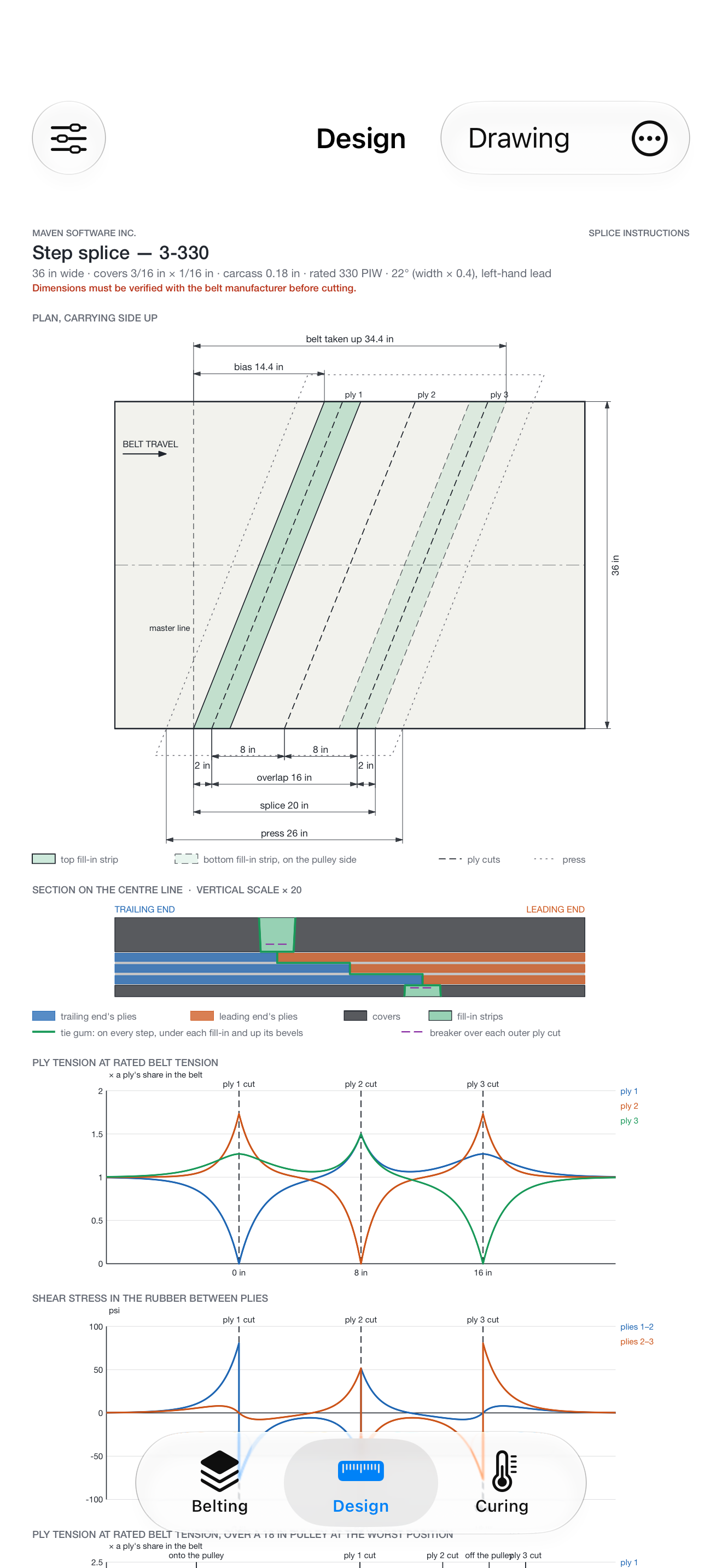
Keep the approved drawing with the job record. A later inspection is much more useful when it can compare the built splice with the dimensions that were actually issued.
Steel Cord Splice and Fabric Belt Splice
Choose by belt construction. The product pages describe each program's planning workflow and current availability.
- Steel Cord Splice: steel-cord layouts, field drawings, cable schedules and the analysis features described on its product page.
- Fabric Belt Splice: fabric-belt step and finger layouts, dimensioned drawings, stress analysis and cure modelling.
The Steel Cord Splice product page currently lists App Store preparation. Fabric Belt Splice has a released worked example. Keep the applicable belt and kit supplier instructions with the software plan.
Sources & scope
The manufacturer reference explains its own multiply splice system. This guide adds a document-review workflow and an illustrative comparison; it does not issue production dimensions.
- Fenner Dunlop: Instructions for hot splicing of multiply belting, version 5.2
Sections 2.6 and 3 distinguish step dimensions and splice over-length. Confirm the applicable current revision with the supplier.
- Fabric Belt Splice: product workflow and engineering scope
Actual Maven drawing, model and export capabilities; generic reference values imply no manufacturer approval.
This AI-assisted guide combines linked primary references, Maven product descriptions and original planning examples. Examples are labelled; equipment-specific decisions require the applicable approved specification.